
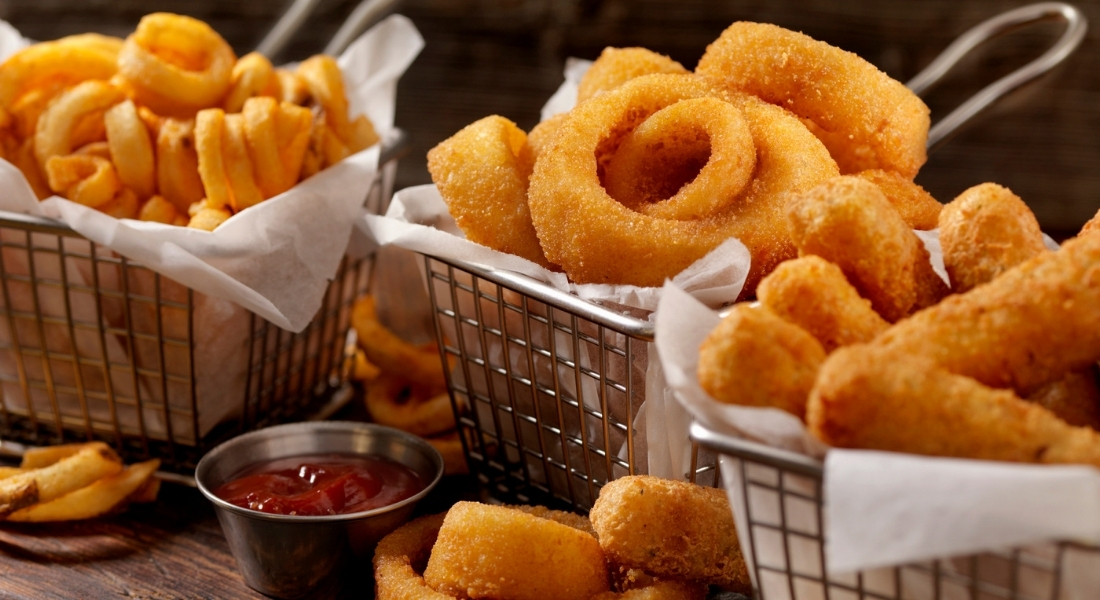
Most of us recognize that meals we prepare at home are healthier than food made in a factory, but you may not know that 60% of the American diet is now considered ultraprocessed.
The least nutritious of those products also tend to be tasty, cheap, and ready-to-eat: sugary drinks, frozen pizza, deli meats, salty snacks, and cookies and candies.
“We’re creating a more comfortable life, but at what cost?” says Muhammad Memon, MD, gastroenterologist on the medical staff at Methodist Mansfield Medical Center. “Studies have shown that the risk of inflammatory bowel disease is four times higher for people who consume more ultraprocessed foods.”
Patients with Crohn’s disease and ulcerative colitis are also at greater risk of developing colon cancer, a disease that’s on the rise in younger generations, Dr. Memon says.
“It’s scary,” he says. “I’m doing colonoscopies and finding that people born after 1970 are at higher risk of developing colon cancer than people born before 1950. Generation X and millennials seem to be at greater risk than baby boomers.”
There’s evidence that ultraprocessed foods may be the culprits in the rise of early-age colon cancer, inspiring a drive to raise awareness among GI specialists like Dr. Memon.

WHAT NOT TO EAT
The first step toward cutting back on heavily processed foods is being able to identify them, and that’s not always easy.
- Processed food is defined as food that has been changed from its natural state. That processing could include canning, cooking, or even simply washing.
- Food is ultraprocessed when salt, sugar, artificial colors and sweeteners, and preservatives are added to the mix.
“Ultraprocessed foods go beyond adding salt, sugar, or fat,” Dr. Memon says. “They often contain high-fructose corn syrup, hydrogenated oils, emulsifiers, and artificial sweeteners to make them taste better and last longer.”
Grocery shoppers would be wise to spend more time on the perimeter of the store, where produce, seafood, and dairy products are kept, and less time browsing the interior aisles and the freezer section.
“Stay away from frozen foods and canned foods as much as possible,” Dr. Memon warns.
If you read a nutrition label and you don’t recognize many of the ingredients, odds are there’s a healthier option.
LACK OF NUTRIENTS
Perhaps just as important as what these foods contain is what they lack: nutrients, vitamins, and dietary fiber.
“When food has been overprocessed, its nutrient profile deteriorates,” Dr. Memon says. “That means vitamins, minerals, and fiber essential for a healthy diet can’t be absorbed.”
When up to 60% of our diet is chock full of empty calories that provide energy but little nourishment, the natural inclination is to overeat — and that contributes to the obesity epidemic.
“What’s more, because processed food is so delicious, people overconsume it,” Dr. Memon says. “They say ‘no one can eat just one,’ and it’s true. They have proved that people who rely on processed foods consume about 500 excess calories per day.”
But while we binge another bag of chips, the healthy bacteria that help us to digest food are under attack by some of the additives in ultraprocessed food.
“We are learning more and more about microbiome disruption,” says Dr. Memon, referring to the bacteria that ensure a healthy digestive system. “All these artificial sweeteners, these artificial meat products, they promote inflammation in the bowels.”
When that microbiome doesn’t get the dietary fiber and nutrients it needs, the bacteria will consume the surrounding tissue, eating away at the protective lining of the digestive system and contributing to conditions like irritable bowel syndrome and inflammatory bowel disease.

BREAKING THE HABIT
Ultraprocessed foods are everywhere, so it may be unrealistic to cut them out of our diets entirely.
“Go natural as much as possible,” Dr. Memon says. “Skip the fast food and cook more food at home.”
For now, many of the studies linking processed foods to conditions like colon cancer and heart disease are anecdotal, relying on observation rather than scientific evidence. But Dr. Memon says he sees the victims every day in his clinic.
“I feel helpless seeing young people having these colon cancers, young people having heart attacks,” he says. “There’s nothing I can do about it except encourage patients to watch what they eat.”





Connect With Methodist