
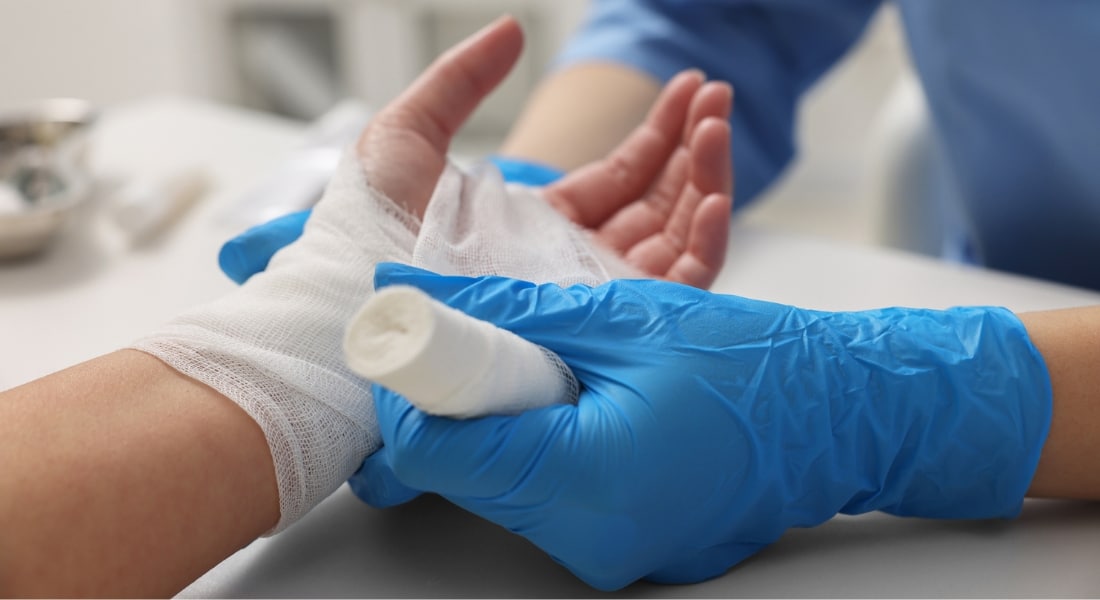
From spray-on skin to laser scar removal, modern burn care may resemble science fiction, but surgeons can attest to the real-world benefits.
“Advances in burn care have helped patients return to more active, independent lives than would have been possible a generation ago,” says plastic surgeon Peter Grossman, MD, FACS, medical director of the Burn Center at Methodist Dallas Medical Center.
Burn patients aren’t just surviving but thriving thanks to new critical-care strategies that improve fluid resuscitation, surgical advances that make burn care less invasive, and infection control to prevent and treat sepsis.
“A burn that might once have been considered unsurvivable may now be survivable — with good function — if the patient reaches a modern burn center quickly and receives coordinated, multidisciplinary care,” Dr. Grossman says.
Texas’ newest burn center at Methodist Dallas is just the third in the region and the first located in southern Dallas, Dr. Grossman says.
“Specialized burn centers are relatively rare because they require a very high concentration of expertise, technology, and dedicated resources to operate safely 24/7,” he says.
Dr. Grossman discussed some of the most promising advances shaping the field of burn care in recent years.
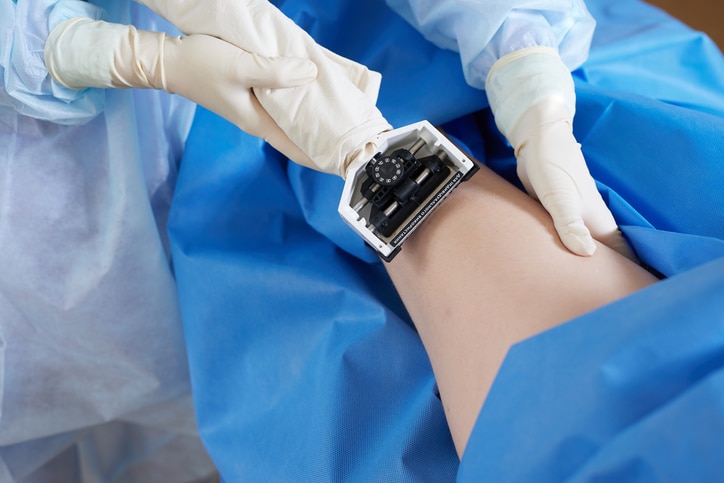
Autografting uses skin from other parts of the body to replace burn tissue.
SPRAY-ON SKIN AND BIOPRINTING
Large burns often require skin to be taken from other parts of the body, a process known as autografting, which also creates a second wound at the harvesting site.
While skin grafting remains the “gold standard” for severe burns, Dr. Grossman notes that autografting has evolved, and new advances work hand in hand to make that process more effective.
For example, a technology known as RECELL allows surgeons to take a very small sample of a patient’s healthy skin, process it into a suspension of skin cells, and then spray that suspension over a prepared wound bed.
“Clinical studies have shown RECELL can achieve wound closure with significantly less donor skin than traditional meshed grafting, while producing comparable healing and in some cases better scar quality,” Dr. Grossman says.
Bioprinting goes a step further by reconstructing living skin layer by layer, from the outer epidermis to the deeper dermis and even hair follicles and sweat glands. It’s a process that might be familiar to anyone who’s used a 3D printer, but bioprinting uses living cells.
“For patients with very large burns, chronic wounds, or limited donor sites, the idea of printing skin that matches their own anatomy and perhaps even pigmentation is extremely appealing,” Dr. Grossman says.
The applications for spray-on skin and bioprinting are still being studied, however, and both techniques are best used in combination with traditional grafting, he cautions.
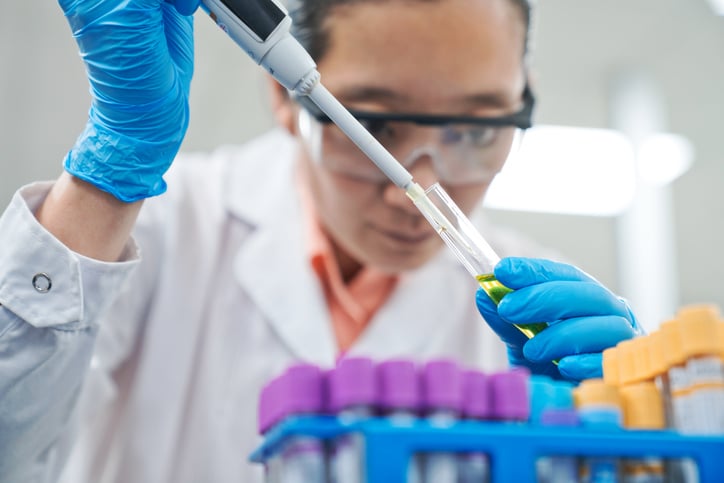
Enzymes can be used to dissolve dead tissue while leaving viable skin to heal.
ENZYMES TO REMOVE TISSUE
Removing dead tissue from burn sites is traditionally handled in an operating room with surgical tools, a process known as debridement.
“It’s effective but can be somewhat imprecise and may sacrifice some viable dermis,” Dr. Grossman says.
While not as direct as a scalpel, bromelain-based enzymes like NexoBrid can be applied as an ointment over several days or weeks to break down dead tissue while preserving healthy skin.
“Studies show that this approach can reduce the need for surgical excision and grafting in some burns, particularly on delicate areas like the hands, by revealing viable tissue that can go on to heal without grafting,” Dr. Grossman says.
These enzymes aren’t a simple fix, however, and still require careful treatment and monitoring by a trained staff, as well as anesthesia.
“It’s not simply a topical cream that replaces the operating room,” Dr. Grossman says. “But it is a step toward more tissue-sparing, minimally invasive burn care.”
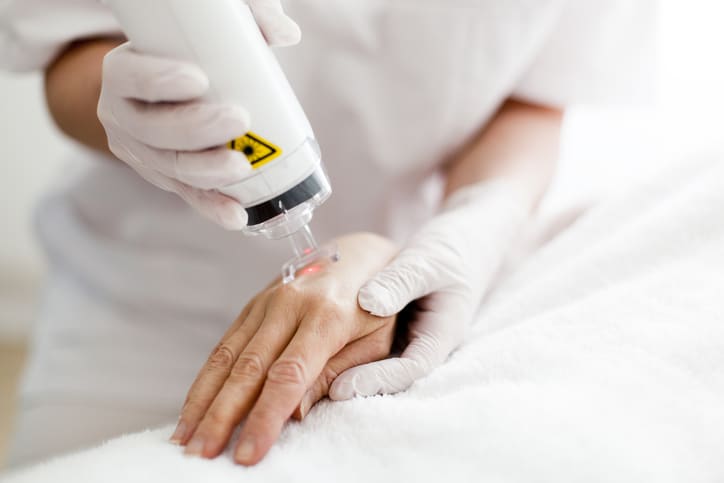
Laser treatments can help flatten and soften scars and even improve range of motion.
LASERS TO TREAT BURN SCARS
Once a severe burn heals, the scars that remain can be itchy and painful and even limit joint movement. The use of lasers to reconstruct and rehabilitate scar tissue represents the cutting edge of burn care.
“Fractional carbon dioxide lasers can soften and flatten the scar, improve texture, and increase range of motion,” Dr. Grossman says.
Laser treatments won’t eliminate scars but instead remodel skin by creating microscopic holes deep in the tissue, stimulating collagen formation. Pulsed-dye lasers are another tool for surgeons, reducing symptoms and redness by targeting overactive blood vessels in the scar.
“For many patients, lasers do more than improve appearance,” Dr. Grossman says. “They can also reduce itching, tightness, and pain.”
Taken together, these advances show how much burn care has evolved in the past several years.
“Over the course of my career,” Dr. Grossman says, “we have seen survival improve dramatically, even for patients with large burns or significant inhalation injuries.”
A vital part of that equation is having a dedicated burn center close at hand when the need arises, and that’s what makes the new facility at Methodist Dallas such a game-changer.
“In a region as large as Dallas–Fort Worth, there have historically been only a couple of verified burn centers to serve millions of people,” Dr. Grossman says. “We can now offer a true center of excellence in a location that historically has had limited access to comprehensive burn services.”




Connect With Methodist