
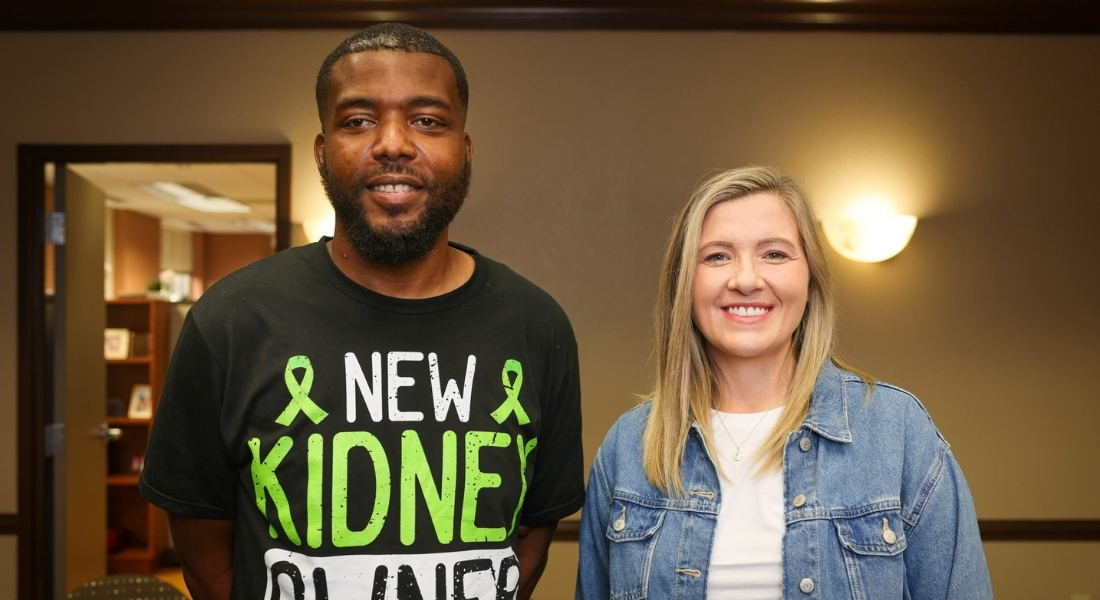
A Cedar Hill father who needed a kidney stopped doomscrolling and turned to his social media feed for hope instead.
Among the thousands of TikTok users who saw Ishmael Thorns’ viral plea for help was a fellow Texan who turned out to be a perfect match. A lifesaving transplant brought Ish and his donor, Brandy Laman, together a few months later at Methodist Dallas Medical Center.
“I thought I was alone,” Ish says. “A lot of us are doomscrolling or see a lot of negative content on social media. This story shows you can use social media for a positive impact. You never know who you’re inspiring.”
For Brandy, giving a kidney to a stranger was a way to repay the generosity of an unrelated donor who donated bone marrow to her husband years ago. She was happy to help Ish in his time of need.
“It’s going to change his life forever,” says the 44-year-old pharmacist from the Houston area. “I would definitely encourage anybody who’s on the fence to consider donating.”
NOT ALONE, AFTER ALL
Ish first learned his kidneys were failing in 2023, when doctors discovered a rare tumor on his adrenal gland. The tumor was releasing a hormone that sent his blood pressure soaring, contributing to kidney and heart failure.
“When I first found out, I was devastated,” he says. “I didn’t know what to expect.”
Dialysis soon became his new normal. Three days a week, four hours at a time, Ish got treatment while adjusting physically and emotionally to kidney failure. Eventually, he began sharing his experience online.
“Once I got acquainted with some others in similar situations,” he says, “I gained the courage to just talk about what I was going through.”
Ish has a relatively uncommon B-positive blood type, and finding a compatible living donor could dramatically shorten Ish’s path to transplant.
Without a living donor, Ish could have waited years before receiving any organ offers, says Christie Gooden, MD, MPH, transplant surgeon on the medical staff at Methodist Dallas.
“Blood-type B patients can wait five, six years for a kidney transplant,” Dr. Gooden says. “The longer you’re on dialysis, the more complications can happen.”
WHY BRANDY DID IT
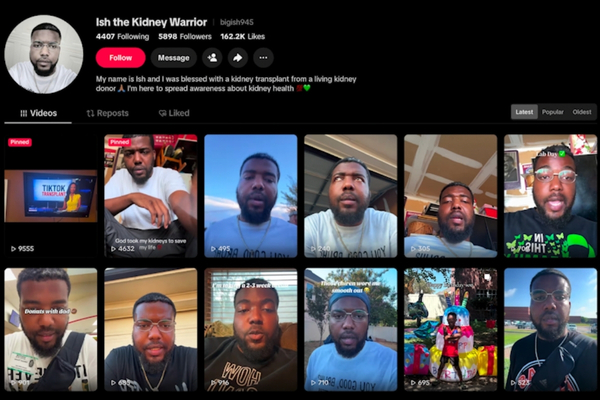
Ish had spent three years on dialysis when he turned to TikTok to document his battle with kidney disease and connect with others going through the same ordeal. When he learned he would need a transplant, he decided to use the platform to ask for a donor.
“I didn’t expect it to get as much traction as it did,” he says. “The viewers just started going up. The comments started going pretty crazy.”
Ish posted that he was searching for a donor and shared that his blood type was B-positive, the same as Brandy’s. She posted a direct message on Ish’s TikTok page.
“Hi Ish! I’ve been following you and your journey,” she wrote. “We live in Houston and definitely willing to help you get a kidney if we can.”
Brandy’s decision to donate was personal. Her husband was diagnosed with leukemia in 2023 and received a bone marrow donation from a donor in Germany.
“That really prompted me to want to pay it forward,” says Brandy, who filled out the donor application almost immediately, “and maybe help another family in need.”
HOLDING OUT HOPE
Brandy’s message gave Ish something he had been waiting a long time for: hope that a life beyond dialysis might finally be within reach.
“Something about her message seemed sincere,” Ish says. “It seemed like she really wanted to be a part of what I had going on with my kidney disease.”
Once Brandy began the process of becoming a living donor, the next step was to determine whether she could safely donate and whether she was a match for Ish.
Potential donors like Brandy must undergo extensive medical testing, including bloodwork and imaging, before they are cleared for surgery, says Alejandro Mejia, MD, executive program director of organ transplantation at Methodist Dallas.
“Our job is to make sure that the donor is completely medically cleared to donate,” Dr. Mejia says. “Everything looked perfect.”
As Brandy continued the process, Ish tried to keep his excitement in check, but every step made the possibility feel more real.
Despite months of communicating through TikTok and text messages, Ish and Brandy had never met in person.
That changed about a week before surgery.
MEETING HIS MATCH
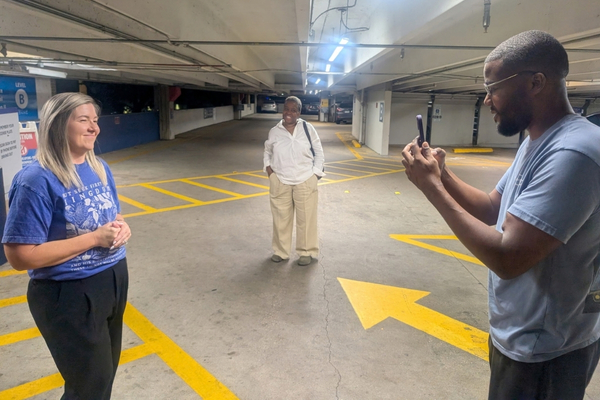
In July 2026, Brandy was at the Transplant Institute at Methodist Dallas for an appointment when she heard a voice she recognized all too well after watching so many of Ish’s videos.
“I went up to him,” Brandy says. “It was really nice to see him in person and get to hug him and tell him how glad I was to be doing it for him.”
“We embraced, we hugged,” Ish says. “That’s really when it felt real.”
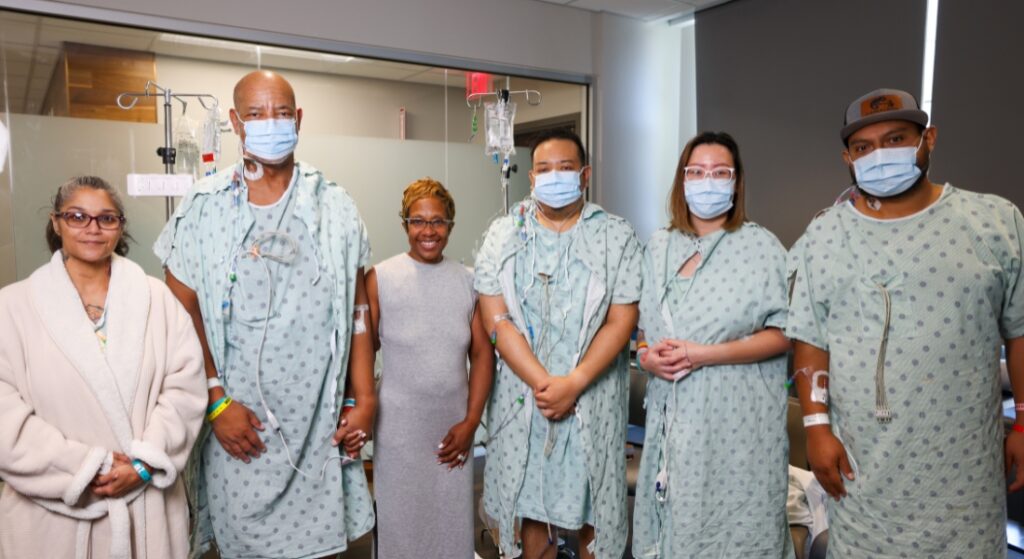
Soon, the two people who had first connected through a phone screen were preparing for surgery at Methodist Dallas.
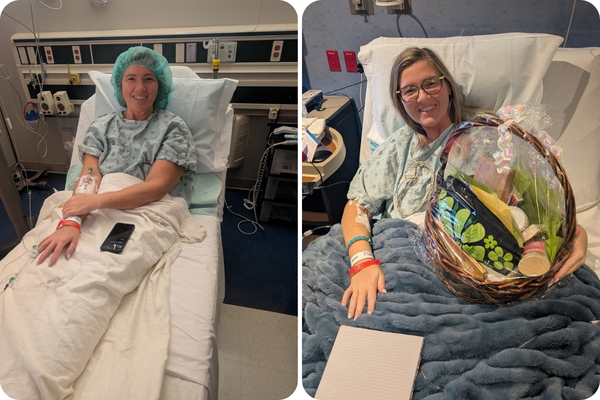
Days later, Dr. Mejia removed Brandy’s kidney using a minimally invasive robotic approach. The kidney was then prepared and taken to Ish’s operating room, where Dr. Gooden transplanted it.
For Ish, getting to that moment was almost difficult to believe.
“My experience at Methodist Dallas was great from start to finish,” Ish says. “All the nurses, the doctors, the social workers I interacted with were all very helpful and kind. I felt safe.”
With decades of experience and a patient-centered focus, Methodist Dallas has built a national reputation for transplant excellence. Visit MethodistHealthSystem.org
Then he woke up from surgery.
“I immediately felt the difference,” Ish says. “It’s a new start.”
One of his first thoughts, besides seeing his boys again, was about how Brandy was doing.
She spent just one night at Methodist Dallas after surgery and says she was already feeling good a couple of weeks later.
Dr. Mejia says living donors can typically return to work within weeks, with some temporary restrictions as they recover.
“You really can resume a completely normal lifestyle in a couple of months,” he says.
Dr. Gooden says getting back to everyday life is one of the biggest benefits of transplantation.
“I love seeing my patients out and about, being with their families, all the things that they were limited in,” she says. “Transplant helps give back quality of life. You take somebody off dialysis, you give them a new lease on life.”
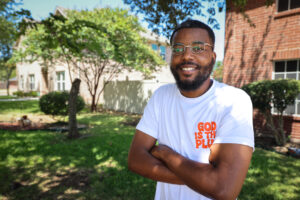
SHARING HIS STORY
Ish’s story went viral again when the news media learned how his TikTok plea led to Brandy’s selfless gift. Every TV station in Dallas-Fort Worth was eager to spread the word, as were outlets as far away as Phoenix and Florida.
“I want to use my journey with kidney disease to inspire other living donors to donate and educate others,” says Ish, who plans to keep using the same social media platform to help others with kidney disease. “My plan is to advocate for my fellow kidney warriors.”
Brandy, too, feels fortunate to have met Ish and joined him in spreading the word, encouraging others to consider donating life.
“I was just honored that I got this opportunity, that I came across him,” she says. “It’s been just as much a blessing to me to be able to do this.”
With his fully functional kidney, Ish’s top priority post-transplant is simple: make the most of the second chance a stranger gave him by spending more time with his boys, ages 5 and 6.
During his years on dialysis, his sons knew their dad went to the doctor often and needed plenty of naps. Now they are getting to see a different side of him.
“They’re excited that their dad has more energy to play outside with them,” Ish says.



Connect With Methodist