
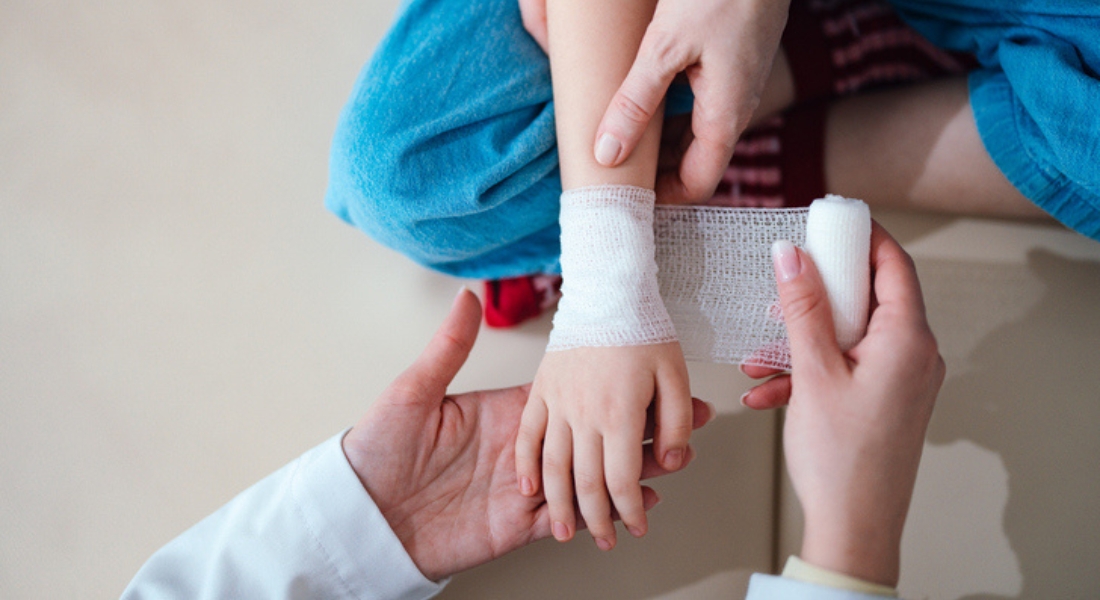
Not every cooking mishap or backyard bloodshed requires stitches, but there are a few telltale signs that a gash may require more than a Band-Aid.
“A shallow cut with smooth edges or a small puncture wound often doesn’t require stitches,” says Brian Mayer, DO, regional medical director for Methodist Legacy ER & Urgent Care and emergency medicine specialist on the medical staff at Methodist Southlake Medical Center. “But if the cut is deep, jagged, long, or has edges that won’t stay together, it probably needs medical attention.”
Dr. Mayer shares other ways to tell the difference between a scrape you can tend at home and where to go when you need extra help.
DO I NEED STITCHES?
While a medical provider should make the final decision, Dr. Mayer says there are some common signs that a cut may require stitches:
- The area feels numb
- The cut is deep, jagged, and long
- Bleeding doesn’t stop after applying direct pressure
- The cut is on the face, groin, or directly over a joint

Slicing up vegetables can be dicey, especially when a mandolin slicer is involved.
Injuries to the chest, abdomen, pelvis, or neck often require immediate medical attention. Don’t hesitate to seek help, especially if the wound is to the eye or throat.
Also, play it safe and get help if the wound was caused by a bite, whether from an animal or another human, or from a dirty or contaminated object like a rusty nail. For some wounds, patients may need a tetanus shot or even antibiotics, in addition to stitches, to prevent infection.
“If you’re unsure,” Dr. Mayer says, “it’s always better to have it evaluated than to guess.”
Some wounds might require a trip to the ER, but often visiting urgent care is enough.
WHERE TO GO FOR CARE?
Once you’ve decided a cut needs medical attention, the next question is where to go. The answer depends on the severity of the injury, Dr. Mayer says.
Go to the ER:
- The cut is very deep or wide
- The bleeding is severe and won’t stop despite direct pressure
- The wound has torn or ragged edges
- Muscle, tendon, bone, or a large blood vessel is visible
- The injury is over a joint and appears deep
- The cut involves the face, scalp, eye, or another high-risk area
- An object is embedded in the wound
Another reason to seek medical attention is if there are any signs of infection around a cut or scrape. Those signs could include:
- A fever of 100 degrees or higher
- Wound is warm, swollen, or oozing
- The area around the cut gets redder or more painful
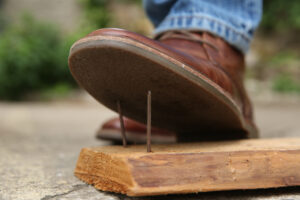
Stepping on a nail might seem relatively minor, but a tetanus infection can be life-threatening.
Urgent Care is often the right choice:
- Straightforward cuts that may need stitches for cosmetic reasons but aren’t severe
- Shallow lacerations with controlled bleeding
- Cuts caused by dirty or rusty objects when nothing is embedded
- Minor wounds that need cleaning, closure, or a tetanus shot
What you can do before seeking help:
- Apply pressure to stop the bleeding. If necessary, use a hemostatic powder like BleedStop to help the blood clot
- Clean the wound, but avoid scrubbing and don’t use iodine or hydrogen peroxide, chemicals that can irritate the injury. Instead, use tap water and mild soap (after washing your hands, of course).
- Apply antibiotic salve and place a clean bandage over the wound
“Don’t try to diagnose it yourself. Come in and let us take a look,” Dr. Mayer says. “We’d much rather evaluate a cut early than have you wait until it becomes a bigger problem.”




Connect With Methodist