

Darrah Rippy wanted to get physically fit before her trip to New Zealand – a “magical” 50th birthday gift to herself.
“I didn’t want to get there and not enjoy hiking and nature to the fullest,” says the longtime administrator at SMU. “I wanted to feel strong.”
Getting fit for her big trip was one motivation for Darrah; losing the stubborn weight she gained during perimenopause was another. That inspired her to turn to the Medical Weight Loss & Wellness Program at Methodist Dallas Medical Center
A year later she feels stronger and is 60 pounds lighter, cutting her body fat percentage from 42.4% when she started to below 24% now.
“I’ve learned one mistake is not a forever mistake,” Darrah says. “Every day is a day to start over.”
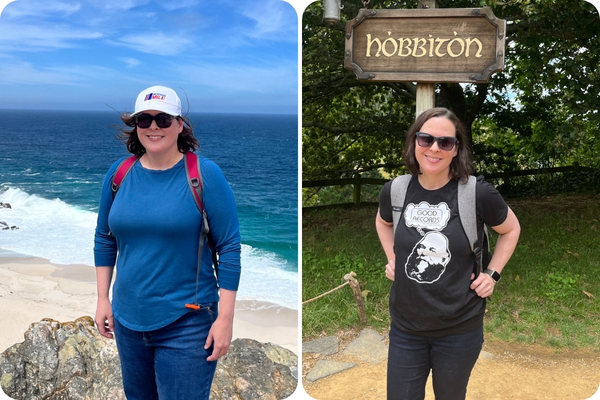
From left: Darrah on vacation before her weight loss and in New Zealand, where she visited the Lord of the Rings set.
TEAM APPROACH
Darrah approached her 50th birthday feeling the effects of an office job and a largely sedentary lifestyle.
“The years had caught up with me,” says Darrah, the associate registrar for curriculum and scheduling at SMU, where she has worked for 26 years. “Weight, stress eating, plus the hormonal changes that come with middle age.”
So she got a referral from her primary care doctor, Gabriela Arias, MD, family medicine physician on the medical staff, who recommended Darrah try the weight loss program for which she serves as medical director.
“Our program is designed to provide a comprehensive and personalized approach to weight management,” Dr. Arias says. “The team is committed to providing people like Darrah with support and resources they need to succeed.”
Darrah liked the accountability and medically supervised approach offered by the program. That buy-in was critical to her success, says Katherine Odom, BSN, RN, CBN, nurse navigator for the program.
“Darrah was mentally prepared and really bought into this,” says Odom, whose work was instrumental to the program’s creation in January 2025. “Now, eating healthy foods and working out — no matter how much time she has — is part of her everyday life.”
Darrah felt more energy shortly after starting the program in April 2025, and seeing her muscles develop became every bit as motivating as losing weight.
“The longer you stick with this, the more it becomes a lifestyle and not a chore,” Darrah says. “I had to find what works for me.”
Learn more about the Medical Weight Loss & Wellness Program at Methodist Dallas Visit MethodistHealthSystem.org
USING ALL THE TOOLS
During her year on the program, Darrah benefited from nutrition counseling, fitness coaching, body composition analyses, access to a smartphone app, and unlimited email communication with the wellness team.
“I probably struggled the most with diet — not that I didn’t know what to do, but I wasn’t doing it,” says Darrah, who’s read many fitness magazines over the years. “Knowing and doing are quite different.”
At the recommendation of Dr. Arias, Darrah added a GLP-1 prescription to her fitness plan.
Initially, Darrah was hesitant to add the medication — originally designed to combat diabetes and now taken by 1 in 10 Americans for weight loss. She’s now comfortable with her decision.
“Combining it with everything else gave me an option to do things the right way,” Darrah says. “The medication is truly a tool. You can have success with it, but you have to do other things in conjunction.”
Darrah was ready to make life-altering changes and went all in, utilizing the online nutrition and fitness coaching, as well as attending monthly in-person meetings at Methodist Dallas.
“We’ve done potlucks, looked at grocery store labels, planted herbs for seasoning,” she says. “We even talked about what to do when you feel you’ve been derailed.”
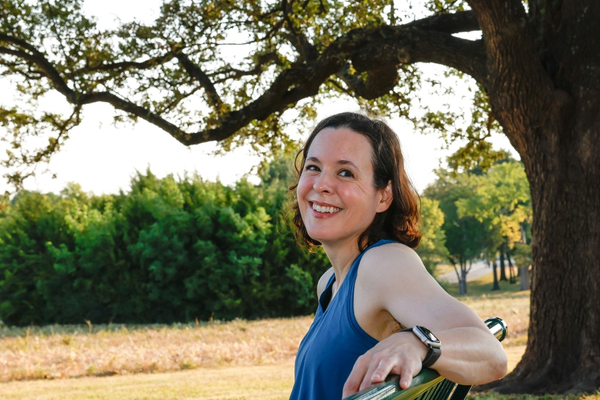
Months after her time in the program ended, Darrah has maintained the good habits she learned.
TAILOR-MADE WEIGHT LOSS
Darrah’s time in the program ended in April, but its lessons continue to guide her. She follows the “protein and produce” dietary mantra, added 50-pound weights to her home workout, and picked up the pace and frequency of her lakeside walks.
There’s a “mind over matter” aspect to the program, too, with journaling and mindfulness playing a part for patients who fine it useful. That tailor-made approach is what makes the program work, Odom says.
“We meet the person where they are to get them where they need to be,” Odom says. “It’s not about judgment; it’s about progress.”
And Darrah sees progress when she reflects on her trip to New Zealand, a reminder of all she accomplished to get there.
“I wasn’t held back by fatigue or lack of physical ability,” she says. “I went on hikes almost every day and got to enjoy full days exploring such a beautiful place. It exceeded my expectations.”





Connect With Methodist