
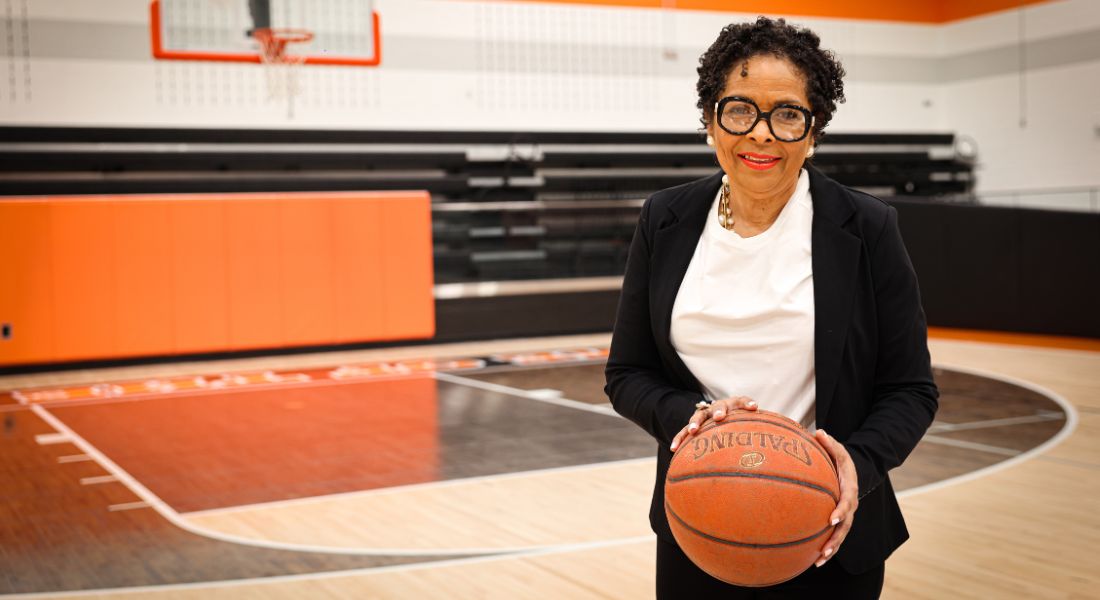
Sharron Jackson spent a career schooling eighth-graders — on the basketball court and in the classroom — so she never expected a heart attack to teach her a lesson.
Little did Sharron know her own mother had survived two heart attacks, the first at age 30. The experience has given this longtime Oak Cliff principal a new purpose: talking openly about heart disease, especially to Black women, who often carry family histories that go undiscussed.
“We don’t talk about these things enough,” the 58-year-old says. “It’s so silent.”
Like those her family lost to heart disease, Sharron suffered a “widow maker” heart attack, which stopped her heart for 10 to 15 minutes.
“I’m in good shape. I play basketball. I’m not overweight,” she says. “I didn’t think it could happen to me.”
Thanks to the quick actions of the paramedics and the team at Methodist Southwest Medical Center, she’s here to tell the story.
“There wasn’t a day I didn’t feel cared for at Methodist Southwest,” she says. “It felt like family.”
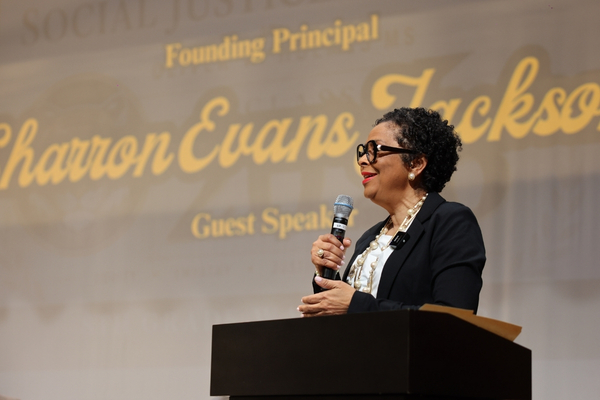 Sharron retired as principal of O.W. Holmes Academy, now John Lewis Social Justice Academy.
‘IT HIT ME. BAM!’
On a Friday in February 2024, Sharron was doing what she always did with her students: playing pickup basketball for pencils. That day, she collected three pencils, meaning she’d beaten three students to 10.
The former college basketball player still had her signature crossover, and it never failed to catch her students off guard.
“That was my move. Not Allen Iverson’s. Mine,” she says with a laugh, referring to the NBA Hall of Famer for Philadelphia, whose crossover dribble put defenders on their heels. “He just gets the credit because he’s on television.”
The next day, she was making dinner when her chest started to hurt. She told her husband, Greg, she needed to go to the doctor. As he walked toward the door, another wave of pain hit, sharper this time.
“I thought, that’s weird,” the 58-year-old recalls. “And then it hit me. Bam.”
She didn’t wait. She called 911 herself.
From prevention to advanced procedures, trust your heart to the innovative, personalized care that Methodist provides. Visit MethodistHealthSystem.org
CARDIAC ARREST
What she remembers next comes in fragments: paramedics working over her in the driveway, the ride to Methodist Southwest, doors swinging open, someone calling for the pads.
“I remember someone telling the young man next to me to keep going, keep going,” she says. “That voice was so reassuring, I just let my shoulders relax.”
Then a jolt: Sharron described a sensation like an orange ball rolling from her feet to her head, and her body lifting slightly off the table.
She had gone into cardiac arrest. Her heart stopped for an estimated 10 to 15 minutes before she was resuscitated.
Sharron had suffered a widow maker heart attack, a complete blockage of the left anterior descending artery, the vessel that supplies blood to a large portion of the heart. Left untreated, it’s fatal more than 90% of the time.
“She had a massive heart attack based on her initial electrocardiogram,” says Abdul Rashid, MD, an interventional cardiologist on the medical staff at Methodist Southwest. “As soon as I saw her EKG, we activated the cath lab to open up that blood vessel.”
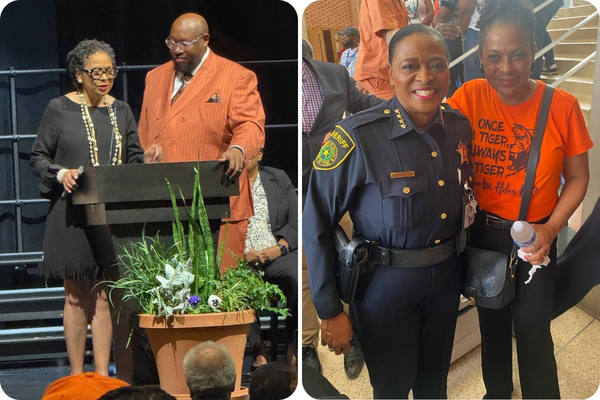 Sharron with Dallas City Councilman Maxie Johnson and Dallas County Sheriff Marian Brown
A RACE TO OPEN ARTERY
In the cath lab, imaging confirmed what the EKG had suggested: Sharron’s artery was completely blocked, while the rest of her heart’s vessels looked healthy. Her care team placed two stents to restore blood flow, a race that, Dr. Rashid says, is measured in minutes, not hours.
“If you open the artery quickly, there’s minimal damage to the heart muscle,” Dr. Rashid explains. “Patients can be functional within days.”
The sooner the blockage opens, he adds, the better the odds of a full recovery. And the sooner the symptoms are identified the better.
“For women, the warning signs aren’t always textbook,” Dr. Rashid explains. “Instead of the classic radiating chest pain, women may feel discomfort between the shoulder blades, in the upper stomach, or in one shoulder, vague enough to explain away, urgent enough to matter.”
Sharron believes she had been feeling those signs for months without recognizing them: a squeezing sensation across her back, right along her bra strap, that would come and go.
“I had no idea those could have been mini heart attacks,” she says. “As a principal, the one thing we’re guilty of is not taking care of ourselves.”
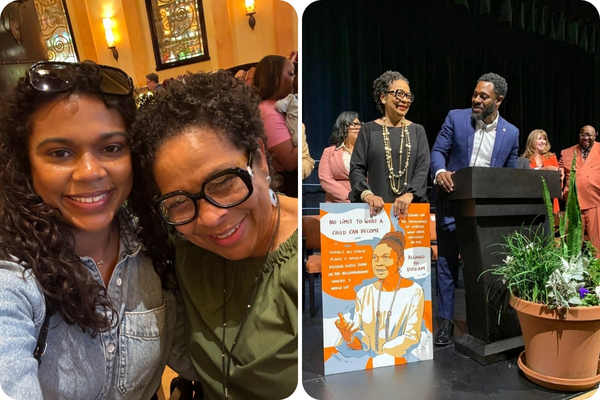 Sharron with her daughter, Imani, and taking a bow during an event to celebrate her career.
ANGEL IN THE ROOM
Sharron spent about a week at Methodist Southwest, followed by cardiac and nutrition rehabilitation. What stayed with her wasn’t just the medicine; it was how she was treated.
“The nurses in cardiac rehab treated me like they’d known me my whole life,” she says. “They celebrated every milestone with me, even the small ones.”
She still hasn’t found the nurse whose calm voice guided her through the worst moments in the emergency room.
“I wanted to bring her the biggest bouquet of roses I could find,” Sharron says. “My mom, my daughter and I still say there must have been an angel in that room.”
Sharron’s heart attack forced a hard look at her family tree. Aside from her mother’s close calls, several of her aunts and uncles died of heart disease.
“I talk about it now, with my kids, my nieces, anyone who tells me they’re not overweight, so they’re fine,” she says.
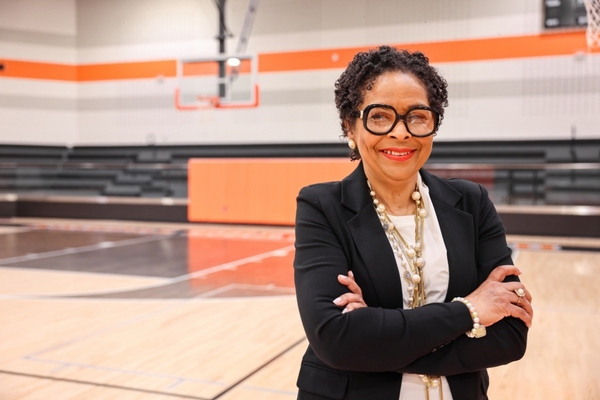 Sharron is determined to raise awareness about heart disease, especially among Black women.
NEW LESSON TO TEACH
Sharron has traded the principal’s office for a role as chief of staff to a Dallas City Council member, mentoring student interns and staying rooted in the same neighborhood where she grew up.
She’s not quite ready to get back into a full pickup game of basketball, she admits, but she can’t resist taking a shot when the ball rolls her way.
In the meantime, Sharron has found a new platform for an old calling: teaching people to protect their hearts at community meetings, homeowners’ association gatherings, and Dallas City Hall.
“When people ask about my heart attack, I tell them two things,” she says. “One: Methodist Southwest is the team you want in your corner. Two: Watch what you eat, and don’t wait to get checked out.”
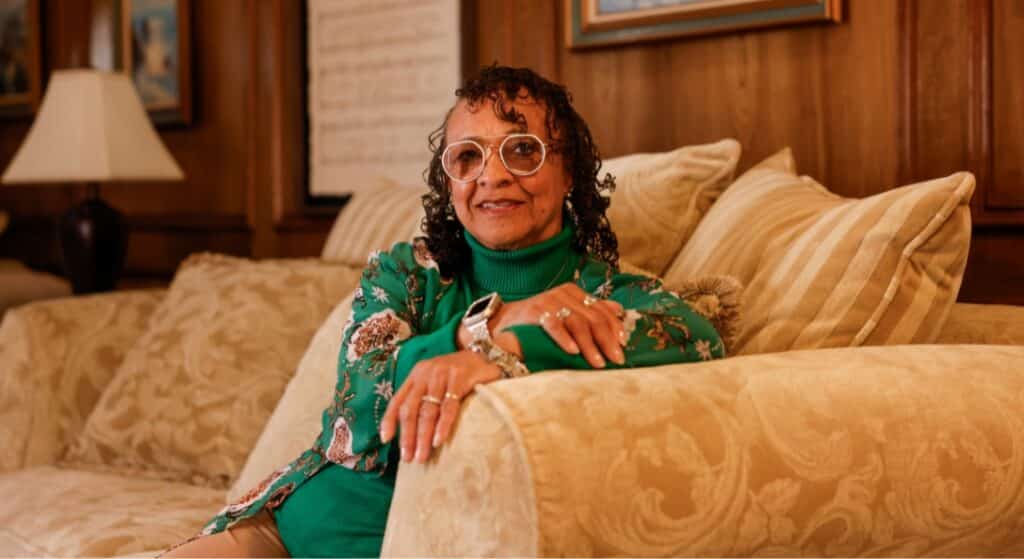




Connect With Methodist