

For decades, millions of women struggling with fertility and irregular menstrual cycles had a common name for their affliction: PCOS.
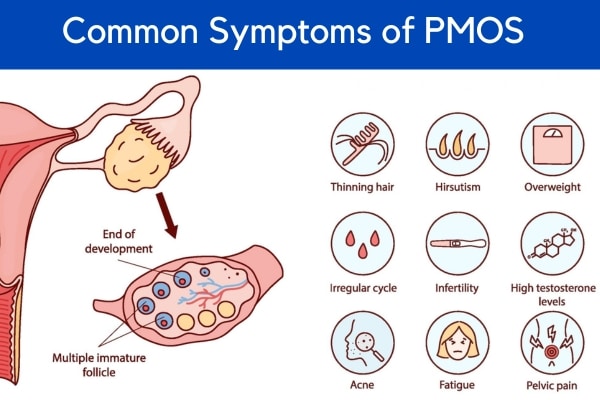
Now doctors have renamed polycystic ovary syndrome, a condition that affects 1 in 8 women of reproductive age and often begins in their teens with weight gain, irregular periods, excess facial hair, and fatigue.
“A name carries weight,” says Jennifer Teague, MD, OB-GYN on the medical staff at Methodist Dallas Medical Center. “When people hear ‘ovarian syndrome,’ they may assume it’s only about fertility or cysts.”
The new name, polyendocrine metabolic ovarian syndrome, or PMOS, emphasizes a connection with metabolic conditions like diabetes and helps patients understand this is a “whole-body condition,” Dr. Teague adds.
She hopes the updated terminology can also help reduce stigma and improve awareness among patients and healthcare providers.
CYSTS NOT THE CAUSE
The syndrome was first discovered in the 1930s, but researchers at the time misidentified immature egg sacs, or follicles, in the ovaries as cysts. Now physicians understand the condition is linked to metabolic and hormonal health.
“The changes in the ovaries are actually the end of the cascade,” Dr. Teague explains. “Oftentimes, the symptoms begin in their teens with irregular periods, acne, weight gain, and fatigue, among other symptoms.”
Some women spend years searching for answers and are misdiagnosed because part of the confusion comes from the name itself.
Despite the term “polycystic,” some patients have never actually had ovarian cysts, Dr. Teague says. Other women who do have cysts don’t have PMOS.
“Many women have ovarian cysts that come and go on a monthly basis,” she says, “and having them does not mean you have PMOS.”
Instead, a PMOS diagnosis relies on what’s known as the Rotterdam Criteria, where patients meet two out of three markers:
- Irregular menstrual cycles: Cycles that occur less than 21 days apart or greater than 35 days apart
- Elevated androgen or testosterone levels, which physicians can confirm through lab work
- Polycystic ovarian morphology seen on ultrasound: This does not mean having one or two ovarian cysts, but rather having many small follicles on one or both ovaries, more than 20.
“The old name led people to think they needed cysts on their ovaries to have the condition,” Dr. Teague says. “That may have contributed to delayed diagnosis and limited awareness.”

A LINK TO DIABETES
Another important factor in the name change is the condition’s connection to insulin resistance and metabolic disease, namely diabetes.
“Insulin resistance is present in 75% to 90% of people with PMOS,” Dr. Teague explains. “Women with the condition are also twice as likely to develop Type 2 diabetes.”
That’s why treatment today extends far beyond fertility concerns.
PMOS management involves improving metabolic health and lowering insulin resistance through nutrition and lifestyle changes, diabetes drugs, vitamin B8, GLP-1 medications, hormonal contraception, and even hormone therapy.
“This is a new name change, but many of us have known for years that this is a metabolic condition and needs to be managed as such,” Dr. Teague says.

TALK TO A DOCTOR
The earlier a doctor can diagnose PMOS (or rule it out), the better for women who are suffering from unexplained fatigue, irregular periods, or difficulty losing weight.
Dr. Teague encourages anyone who suspects they may have PMOS to start by talking with their primary care doctor or OB-GYN.
“The diagnostic criteria are available to every primary care physician,” she says.
Because the condition affects multiple systems in the body, treatment often involves a team approach that may include primary care physicians, OB-GYNs, and nutrition specialists.
“The more we talk about PMOS,” Dr. Teague says, “the more people will recognize themselves in the diagnosis and seek out care.”